It was a beautiful day in the neighborhood….
My local independent bookstore, Collected Works, is making a name for itself as the place in the city to launch a book. It’s located in a trendy area with an outdoor market, theatre, coffee and tea shops, and fabulous restaurants.

Most importantly for authors, there is plenty of walk in traffic. A very familiar man approached my table. OMG. Jim Watson, Ottawa’s mayor!

“Have you come to my book launch?” I asked, flabbergasted. Our mayor is known for attending hundreds of events per year.
“Actually, I’m here to pick up a copy of the Globe and Mail.”
Not to be deterred, I stuck out my hand to shake his, and with the other offered one of my booklets containing the first chapter of Diamond Lust. Like the successful politician he is, Mr. Watson graciously shook my hand and accepted the booklet.

Some other authors dropped in for Inuit herbal tea and bannock. L to R: Candice Vetter, moi, LeeAnn Burke, and Sharon Page all helped to make the day special.
Another friend, Marie Lilly, announced that she’d completed a revised screenplay inspired by Diamond Lust, has sent it off to an interested director, and has entered it into an L.A. screenplay competition.
A big hug and thank you to the wonderful Chris, Craig and the staff at Collected Works and to the friends and readers who dropped by.
Tags: Diamond Lust · Marketing
Join me at Collected Works on Saturday, May 7 from 1-3 p.m. to help celebrate the launch of my debut novel. Here is the official announcement:
Diamond Lust is the first crime novel that profiles Canada’s billion dollar diamond mining industry. Local author and engineer Madelle Morgan’s romantic suspense “mines” her knowledge of the far north acquired when she worked in Yellowknife, NWT and travelled extensively in the three territories.
Madelle is a member of Capital Crime Writers, Ottawa Romance Writers Association, Romance Writers of America, and Crime Writers of Canada. Join her to talk about diamond smuggling over bannock and Inuit herbal tea on Saturday, May 7, 1-3 p.m. at Collected Works Bookstore & Coffeebar, 1242 Wellington Street West at Holland Avenue, Ottawa, ON.
I hope to see you there!
Tags: Diamond Lust · Marketing
“My mother says I didn’t open my eyes for eight days after I was born, but when I did, the first thing I saw was an engagement ring. I was hooked.” – Elizabeth Taylor
Carrie Underwood’s new husband, NHL hockey player Mike Fisher, gave her a gorgeous yellow diamond engagement ring back in December 2009. A round brilliant cut of at least 5 carats, the yellow flawless diamond is said to be worth $150,000. The tiny diamonds in the band and setting bring the total up to 12 carats or more. What a fabulous custom-designed ring by Jonathon Arndt, jeweler to the stars! Carrie has worn his jewelry at several awards shows.

Colored or “fancy” diamonds are very popular with those with bags of money to spend, but most of us regular folks must choose from a wider and more affordable selection of colorless diamonds.
Gemologists grade the color of a cut diamond before it is put in a setting using the Gemological Institute of America (GIA) scale below. The setting can affect the colour. For example, a gold setting will enhance a yellow tint. The highest grade, and therefore more expensive, diamonds are graded D-E-F.
D-E-F Colorless
G-H-I-J Nearly colorless
K-L-M Faintly tinted, usually yellow
N-O-P-Q-R Lightly tinted, usually yellow. Tint can be seen with the naked eye.
S-T-U-V-W-X-Y-Z Tinted, usually yellow, may progress to brownish. Tint visible to the naked eye.
But say you want a trendy colored diamond like this pink emerald cut. What should you consider?

First, fancy diamonds come in a range of colors and are quite rare and expensive. Naturally-colored diamonds are labelled “fancy colored” diamonds. The most affordable are the yellow diamonds because they are relatively more plentiful.
Second, buyers need to be wary of color-treated diamonds passed off as genuine yellow, pink, blue, or other colored diamonds. Key words to watch for are “tinted” or “color-treated”. Tinted diamonds may have a yellowish tint but are graded at the bottom of the GIA A-Z scale for colorless diamonds. That is, they are not considered to be fancy colored diamonds. Color-treated means the color has been artificially enhanced through special treatments.

Fancy colored diamonds are graded on a different GIA scale.

If you are comparison shopping, the About.com web site provides excellent guidance on selecting a colored diamond. Beautiful photos accompany the article. It’s worth a visit.
Colored or white – what’s your preference?
Tags: Diamond Lust
February 6th, 2011 · 1 Comment
“Better a diamond with a flaw than a pebble without one.” - Chinese proverb
Wouldn’t we all prefer to have a diamond that is graded FL – completely flawless?
The reality is that “Clarity” strongly affects a diamond’s value, but not our enjoyment of the gem. Unless the diamond is graded I1 to I3, or “imperfect”, most flaws are impossible to see with the naked eye. You’d need a jeweller’s loupe of 10X magnification to see the flaws, which are also called inclusions.
Clarity is graded by several scales, but the most popular is the Gemological Institute of America’s scale:
Flawless (FL); Internally Flawless (IF); Very, Very Slightly included (VVS), Very Slightly included (VS); slightly imperfect (SI); and imperfect (I).

The various grades are described at DiamondReview.com, which recommends that consumers avoid buying diamonds graded I1 to I3 and SI1 or SI2. They also advise that clarity flaws are much more readily visible in step cuts than in brilliant cuts. (See my October 3 post for descriptions of “Cut”.)
They also warn buyers to beware of clarity-enhanced diamonds, where the flaws have been covered up. These diamonds may not be as durable.
So when shopping, narrow your selection to diamonds with clarities of VS1, VS2, and the slightly better VVS1 and VVS2 grades. Ensure the diamond has not been clarity-enhanced by checking the Gemological Institute of America certificate.
It’s “clear” to me that your intended shouldn’t necessarily fork over the premium for the very rare FL clarity. Either the V or VV grade should suffice. The savings can be spent on the honeymoon!
Tags: Diamond Lust
“I never worry about diets. The only carrots that interest me are the number of carats in a diamond.” – Mae West
Prince William apparently toted a valuable ring (18 carat oval sapphire surrounded by 14 diamonds) for weeks in his back pack while on holiday in Africa before proposing to Kate.

How big is a carat, anyway?
“Carat” is a measure of weight. One (1) carat weighs 200 milligrams.
The weight of a sapphire, diamond, or other gem is the easiest of the Cs to verify. Simply ask the jeweller to zero his scale and verify the weight in milligrams. Then to convert that back to carats, use this simple formula:
Divide the actual weight in milligrams by 200 to get the number of carats.
Example: Say the actual weight is 450 mg. 450 ÷ 200 = 2.25 carats.
A “point” is one-hundredth of a carat. Jewellers often describe the weight of a gem that is less than one carat in terms of points. One carat is subdivided into 100 points. A ¾ carat diamond would be ¾ x 100 = 75, or a “75 point” diamond. In milligrams it would weigh ¾ of 200 mg, which is 150 mg.
To verify that the point size is accurate, ask the jeweller to weigh the diamond. Divide the point size by 100 and multiply by 200 to get the equivalent weight in milligrams.
Example: The salesperson says the diamond is 63 points. 63 ÷ 100 = 0.63. The scale weight should be 0.63 x 200 = 126 mg. If the actual weight is less than 126 mg, then the real point size is smaller.
A diamond that is under one carat, even one point less than a full carat, is considerably less expensive. Visually there is not much difference, so those on a budget may wish to ask the jeweller to show them diamonds in the range of 90-99 points.
To make things complicated, the size of a diamond is not correlated with the weight. According to CanadaDiamonds.com, two diamonds of the same carat weight may appear to be different sizes depending on how the diamond is cut. Some diamonds will have extra weight on the bottom part — or pavilion — of the stone, and therefore appear smaller. See my October 3 post for a description of “Cut”.
I’ve covered two of the essential Cs – Cut and Carat. Up next is “Clarity”.
Bigger is not necessarily better!
Tags: Diamond Lust
“I know a man who is a diamond cutter. He mows the lawn at Yankee Stadium.” – Anonymous
Perhaps the expression “a cut above the rest” originated with diamond cutters. They have a job in which one tiny wrong move can spell disaster. I witnessed a diamond cutter at work in Yellowknife. She calmly and repeatedly ground a rough diamond worth several thousand dollars against a spinning horizontal wheel, shaving off a few micro layers each time. Personally, I am not “cut out” for the exacting work.
Rough diamonds – what Naomi Campbell called dirty-looking stones – are the starting point:

What does a diamond hunter (in the retail environment, that is) need to consider regarding cut?
The proportions are important. The key is to compare the pavilion depth to the diameter.

A diamond with a deep cut will have much of its weight below the setting, making the diamond appear smaller than a diamond of the same carat weight but with a shallow cut.

Another choice is the cutting style. Would you prefer a diamond with a Brilliant Cut or a Step Cut? According to DiamondReview.com these are the two most common cutting styles.

The Brilliant Cut has triangular facets.
The Step Cut diamond has rectangular facets.
The Diamond Review web site gives this advice: If you want the shiniest diamond possible, select a brilliant cut. If you prefer a more glassy, elegant stone, the step cut is for you.
Mike Botha, a Canadian diamond expert, designed the world’s most intricate cut for optimal brilliance – 111 facets compared to the average of 57 facets. His design was named the Las Vegas cut. Of course, the price for such intricate workmanship is steep. A one carat diamond with the Las Vegas cut would set you back a cool $10,000.
So how does a consumer know if a diamond has a good cut?
Gemologists grade the cut as Ideal, Premium, Very Good, Good, Fair, or Poor. See CanadaDiamonds.com for detailed descriptions of these grades.
Cut is not shape. The various diamond shapes, such as Pear, Round, Square, Emerald, Princess, etc., will be covered in a separate post.
My favourite cut is Brilliant. I love the light-reflecting sparkle. What’s yours?

Tags: Diamond Lust · Life up North
An Arkansas state park called Crater of Diamonds is the only diamond-producing site in the world that is open to the public. A woman sat down in the shade and noticed a 2.93-carat diamond about the size of a pea just laying there. And she gets to keep it!
A visitor certainly has better odds of finding a diamond than winning the lottery. About 27,000 diamonds, most very small, have been discovered at the 37.5-acre park since it opened in 1972. The largest ever was 16.37 carats – a hefty haul for an afternoon at the park.
Diamond lovers willing to dig a little might consider including a stop at Crater of Diamonds during their next vacation. It might pay for the trip!
Tags: Diamond Lust
It was in the half-unpacked mess that (Eira Thomas) lost a pair of earrings set with two-carat diamonds from the Diavik mine. She’s pretty sure her dog Melville ate them. (“He likes shiny things,” she says.) – from an article at Portfolio.com
Back in 1994 when she was only 25, beautiful red-haired geologist Eira Thomas led the field team that discovered a multi-billion dollar diamond deposit in Canada’s Northwest Territories. She became a very wealthy woman known in mining circles as the “Queen of Diamonds”. Eira is also the inspiration for the character of Petra Paris, the diamond hunter geologist in Diamond Lust.
So whatever happened to Eira?
According to Portfolio.com, “Thomas is out to prove that she is not just the luckiest woman in the world but that she remains a diamond explorer to bet on.”
Now 41, she is Executive Chairman of her company, Stornoway Diamonds Corporation, and married with children. See her photo. The company is focused on Renard, a promising diamond development project in northern Quebec. According to the Globe and Mail, Renard will be Quebec’s first diamond mine, going into production in late 2013.
“Renard” is French for fox. Coincidently, I originally chose Fox Lake rather than Ptarmigan Lake as the name of Diamond Lust’s fictional diamond mine.
But I digress…
Although Eira’s dog ate one set of earrings, the Queen of Diamonds has buckets of the sparklers. The studs have been replaced.
Tags: Diamond Lust
Marcia James, author and public relations expert, is a freelance video scriptwriter and advertising copywriter by day and writer of humorous romance fiction by night. She shares a wealth of marketing and promotional information with other authors on her site, in on-line workshops, and in person. I met her at the RT Booklovers Convention in Columbus, Ohio in April.
Without further ado, here are Marcia’s Top Ten PR Tips:

There are numerous ways for authors to promote themselves before and after “The Call”, but many authors dislike PR and don’t know a lot about it. Today, I’m discussing promotion for the newly published author (although most of these suggestions are pertinent to all authors). Here are some tips to get started and others to narrow down which promotional options are right for you.
1. Choose a pen name, Google it to make sure it’s unique, lock in your domain name, and create a website. I chose my pen name in 2001, and there were only two other “James” romance authors with websites. Now there are so many that I interview a different one each month for my website’s James Gang page (http://www.MarciaJames.net/James_Gang.html). You can make lemonade from lemons like I did if things change in the future, but when you’re starting out, it pays to do some research before picking a pen name and branding it. And since your website will be your #1 PR tool, make sure it’s professional. I’m a technophobe, so I hired a Webmistress (Karen McCullough — http://www.KarensWebWorks.com/) to create and maintain my site.
2. Understand branding, learn your brand, pick a tagline that summarizes it, and make all of your marketing efforts reinforce your brand. Branding guru, Jenn Stark, has a Know Your Brand website (http://www.KnowYourBrand.com/kyb/) with resources and helpful information, and she also presents detailed workshops. I cover the basics of branding in my workshops, and here’s how I developed my tagline and branded my PR materials. I knew my author’s “voice” and manuscripts were funny and risqué, so I wanted a tagline and brand that would let readers know they’d get a funny, risqué read when they picked up my books. And I chose a simple tagline (”Hot, Humorous Romances”) that was general enough to encompass all the romance subgenres I want to write — from comic contemporaries and funny romantic mysteries to lite paranormals. My website reflects my comic voice (with the cartoon visuals, the light tone of the text, etc), as well as my books’ sensuality level (with my R-rated book excerpts and my sex advice column “written” by a sex therapist character of mine.) Everything from my business cards and bookmarks to postcards and thumbcuff keychain giveaways reinforce my “Hot, Humorous Romances” brand.

3. Learn what PR options are out there in order to make educated decisions. To pick the best promotional choices for you and your books, you first have to learn what’s available. I have a 285-page WORD file of PR options I give away free to other writers. Just go to the “Contact Me” page of my website and email me requesting the file. I’ll attach the file to my return email. In addition, for those who take my workshops, I offer lectures that present overviews of the different types of author promotion. The following tips are ways to narrow down your self-promotion choices, once you know what they are.
4. Determine how much money you have to spend on promotion. You will hear people comment that you need to spend a certain percentage of your advance or royalties on promotion. This isn’t written in stone. Only you can decide what money you have to spend. And there are MANY free PR options available.
5. Budget your time as well as your money. Unless you can afford a publicist, an author promotion site, or an assistant, it will fall on you to do whatever it takes for your PR push. And any time you spend doing promotion is time spent away from creating those books you want to promote. So take your time constraints into consideration.
6. Take into account any limitations due to your physical location. Where you live can greatly limit opportunities for in-person promotion, such as networking, booksignings, and presenting workshops. And authors who want to promote outside of their countries have to deal with other concerns, such as customs. So your physical location (and travel budget) will impact your PR choices.
7. Consider the PR limitations or requirements of your specific books. For example, there are different opportunities and concerns when promoting an e-book vs. a print book. And shelf life can play a part in how you promote a category print book vs. a single title print book. In addition, the sensuality level of your books might limit the venues where you could hold booksignings. (For example, I have a Chinese crested hairless dog in each of my books, but I doubt Petsmart would offer to host a signing of my more explicit romances.) Once you know what PR options are out there, you can choose which would be best for your specific books.
8. Determine what niche markets are worth targeting. Who is your target audience? The romance-reading community is huge and voracious, but finite. If you can spot elements in your book that lend themselves to niche promoting, you can win new readers and help grow the romance market. For example, if you write Scottish historical romances, you might want to sell your books at a local Scottish fair. If your hero drives a vintage Mustang, you could hand out your PR materials at a vintage car rally. If one of your protagonists is a quilter, you can join an online quilters’ forum. And if your heroine is a special events coordinator, you could contact the professional association for that career and ask their newsletter editor if you could send a press release about the book to their newsletter. You can find contact information for thousands of groups, hobbyists, etc. in several library resource books: The Encyclopedia of Associations and Associations Unlimited.
9. Try not to duplicate the promotional support your publisher is providing. Nothing can beat or replace publisher support, especially when it comes to distribution and brick-and-mortar bookstore placement. Some publishers’ promotional teams will work with authors and some won’t. Learning as much as possible about your publisher’s marketing plan will help you avoid duplicating efforts. For example, ARCs (Advance Reader Copies) of your book are expensive to make, so sending ARCs to the same bookstores and reviewers your publisher does is a waste of money. And authors need to dole out their PR dollars very carefully.
10. Don’t discount the roles your personality and skills play in which PR options are best for you. Not everyone is cut out to do every PR option. There are promotional opportunities that are better suited for extroverts — such as speaking at library functions and power-schmoozing at conferences. Introverts might prefer presenting online workshops and cyber-networking with readers on the Internet. Some authors might have the skills to design their own websites and graphics, while others will shy away from anything technological. For example, I’m coming late to social media sites just because setting up “Marcia James” pages on MySpace, Facebook, etc., was intimidating to me. But I love doing booksignings, in-person networking, being on panels, etc. So you can pursue marketing situations that make the most of your personality strengths and your talents. Thanks to the many PR options out there, an author shouldn’t have to choose promotional opportunities they dislike.
The bottom line…
Authors are being pressured more than ever to do a LOT of self-promotion. It’s easy to feel guilty over not doing enough — and to worry that your promotion isn’t effective. Consider co-promoting or cross-promoting with other authors to share your marketing costs and time. And choose those PR options that work best for you and your books.
Happy promoting!
Marcia James
www.MarciaJames.net

Tags: Marketing
If you’re interested in “balancing” work and pleasure, stop trying to balance them. Instead make your work more pleasurable. - Donald Trump
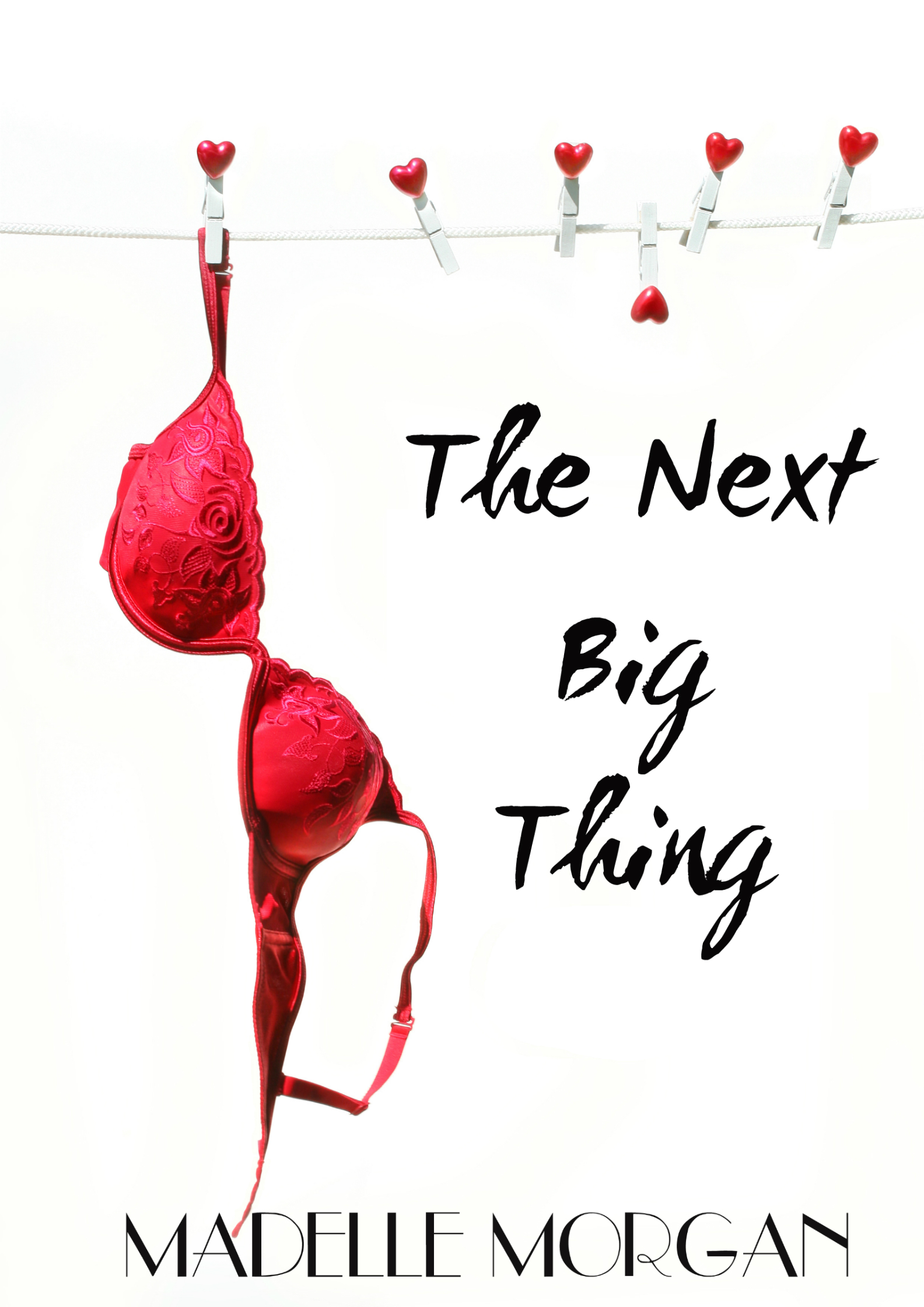
Angela Easton has a rule about not mixing business with pleasure. Then engineer Harry Richards proposes that they partner for a business that is all about pleasure. He’s invented a bra that’s more fun to put on than take off! It’s love or bust for the pair.
The Next Big Thing is my new free short story. Download it at Ellora’s Cave or Amazon’s Kindle Store and let me know what you think.
Tags: Short Stories